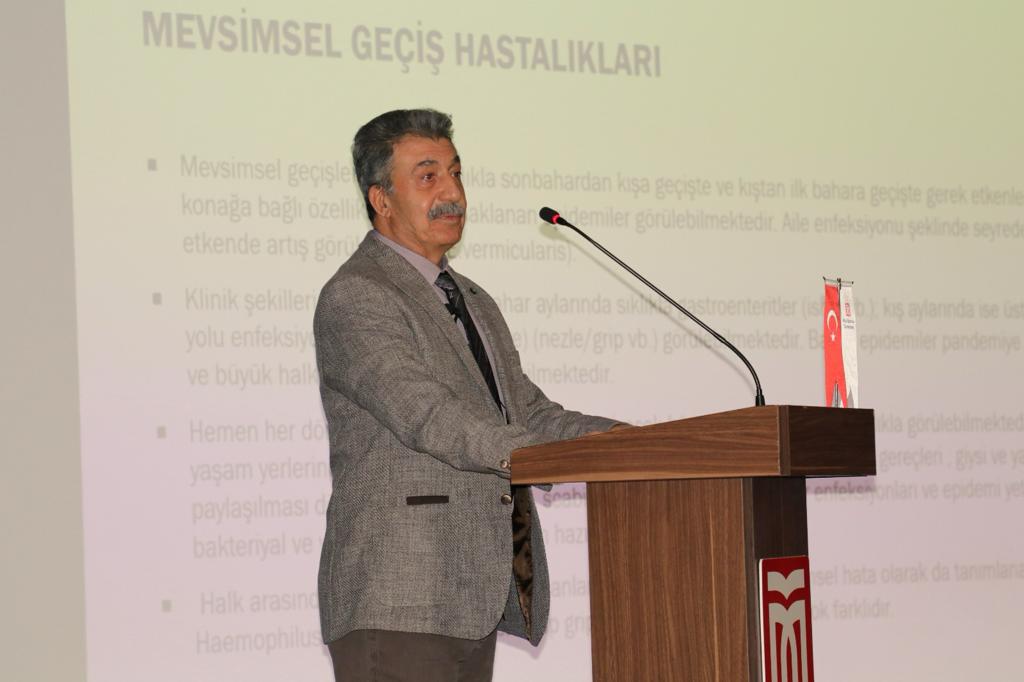
Seasonal Transition Diseases Seminar
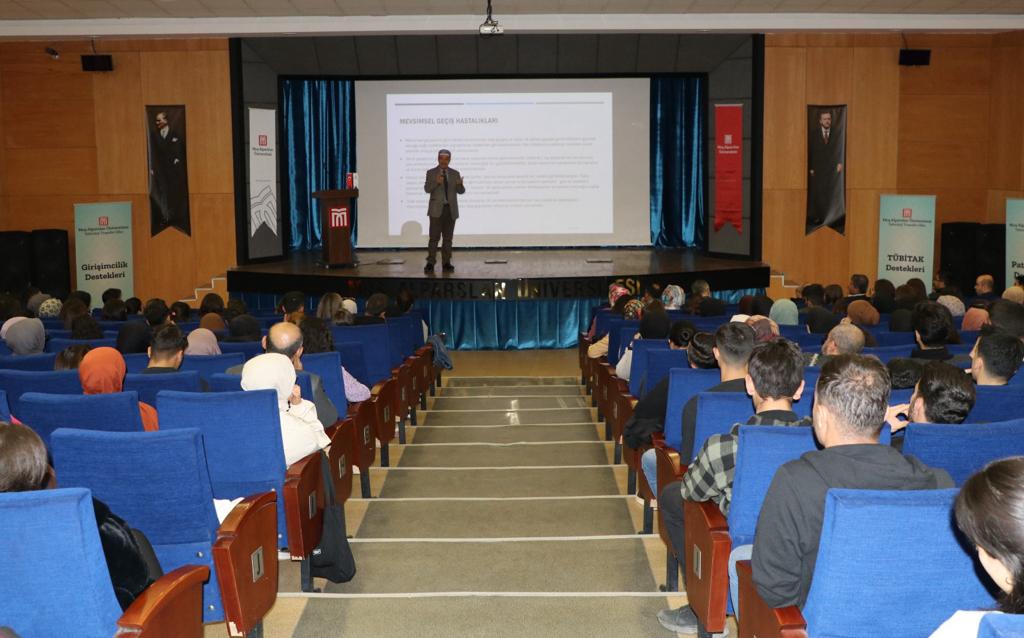
Our University's Faculty of Health Sciences Social and Academic Awareness Society organized an awareness seminar titled "Seasonal Transition Diseases" to draw attention to the issue due to the seasonal transition period and the increase in epidemic diseases throughout the province.
The coordination of the event, which took place in the Sabahattin Zaim Conference Hall, was led by the Deputy Dean of the Faculty of Health Sciences, Dr. Öğr. Üyesi Özgür Yeşilyurt.
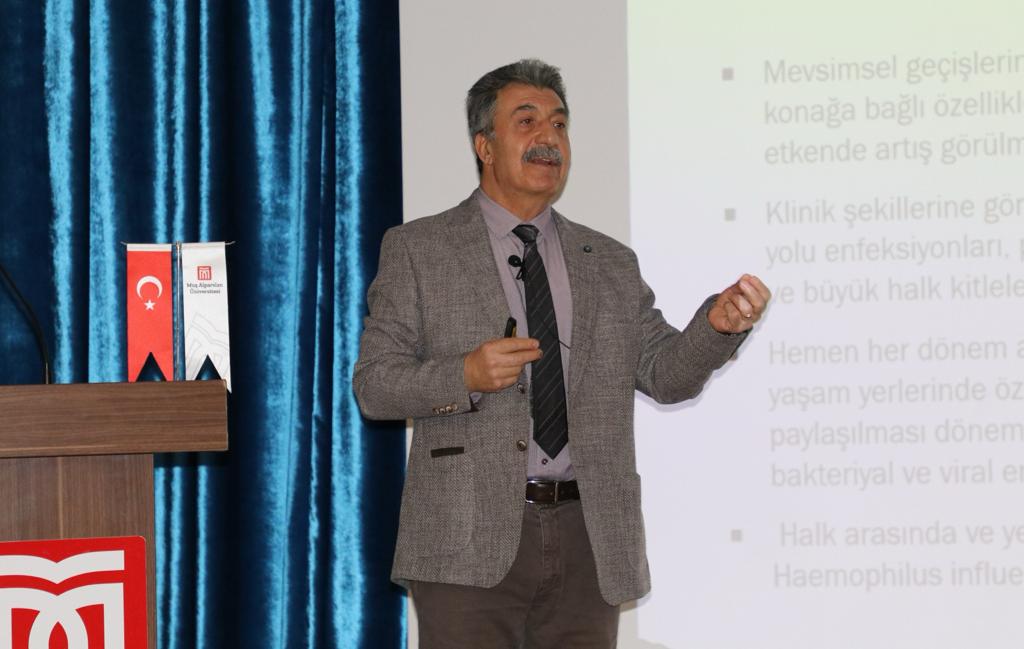
The guest of this week's seminar on "Seasonal Transition Diseases" was Prof. Dr. Mustafa Yılmaz, the Dean of the Faculty of Dentistry at Muş Alparslan University. The seminar highlighted diseases that tend to increase during seasonal transitions, such as scabies, meningitis, whooping cough/diphtheria, rubella, measles, scarlet fever, lice infestation, cold sores, molluscum contagiosum, and cholera.
In his speech, Prof. Dr. Yılmaz stated, "Epidemics resulting from both agents and host-related factors can be observed during seasonal transitions, especially during the transition from late autumn to winter and from winter to early spring. Many infections that manifest as family infections show an increase in various agents. Depending on their clinical presentations, gastroenteritis (diarrhea, etc.) is often seen in the summer and spring months, while upper respiratory tract infections and pneumonia (colds/flu, etc.) are common in the winter months. Sometimes, epidemics can turn into pandemics and infect large populations. Seasonal transitions can lead to epidemics of diseases capable of causing outbreaks, such as Measles, Rubella, Rotavirus, Enteroviruses, Picornaviruses (COVID, SARS, etc.), Mumps, and Chickenpox. Rarely, viral meningitis can cause serious health problems. Bacterial agents, such as upper respiratory tract infections (Streptococcus/Scarlet Fever, Hemophilus, Pneumococcal infections), can also lead to epidemics. Hemophilus bacteria, in particular, can cause meningitis epidemics in children under 5 years of age, while pneumococci can cause meningitis epidemics in adults."
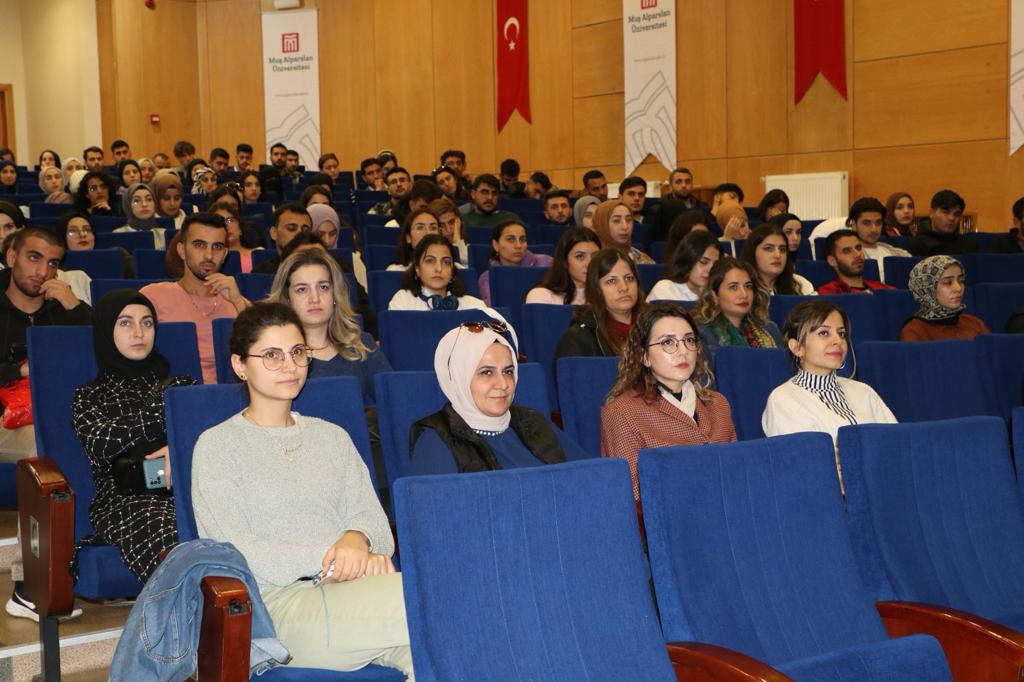
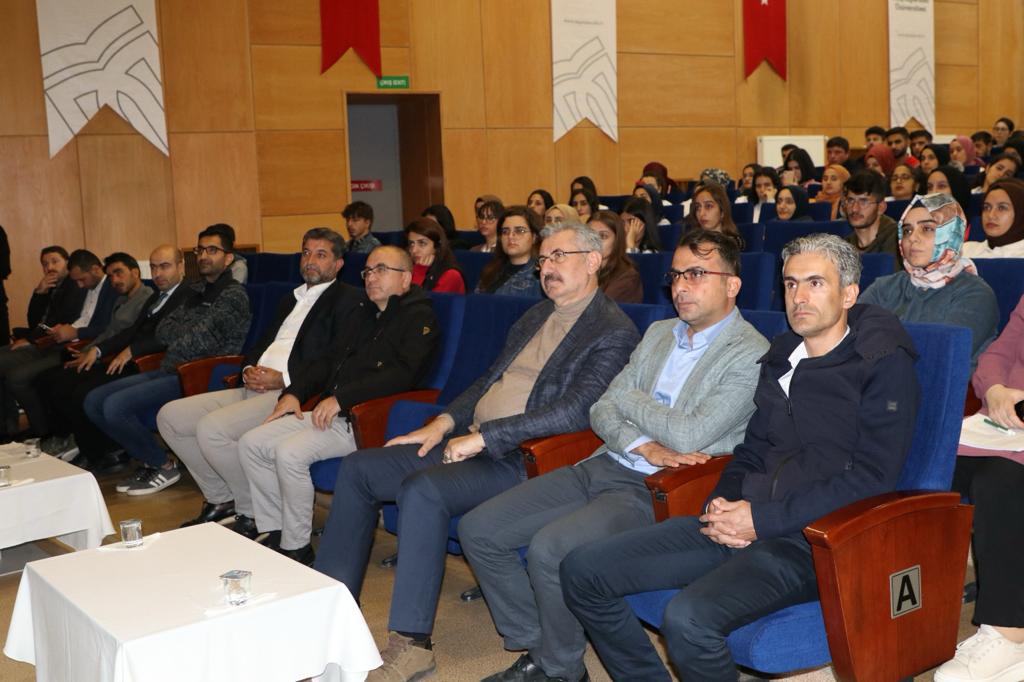
The seminar, which saw a high level of participation, drew interest from both academics and students.